
Why Indoor Soccer Domes Are the Easiest Sports Facility to Market (And Most Owners Still Get It Wrong)
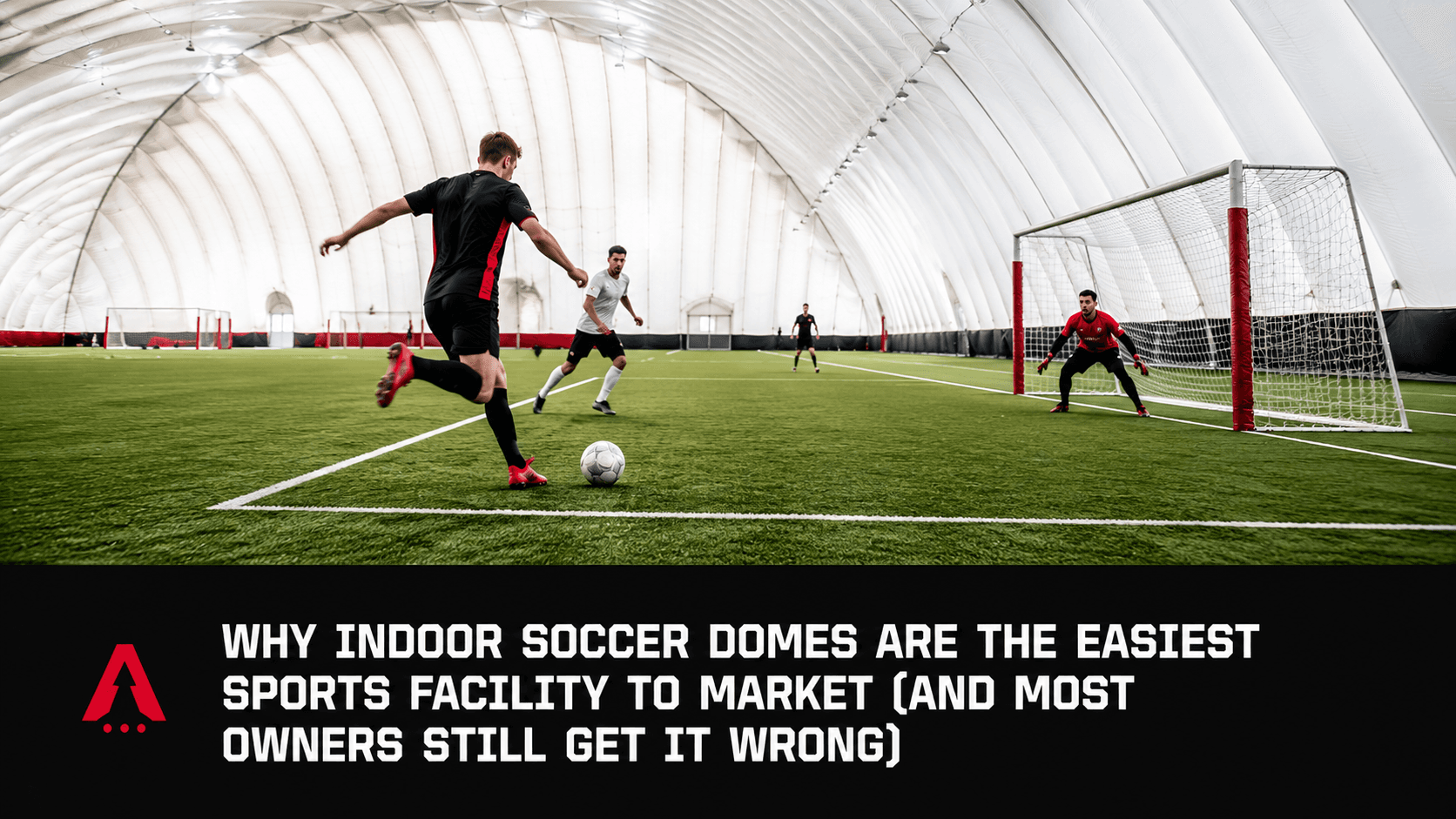
If you had to design a sports facility from scratch to be easy to market, you would end up with something close to an indoor soccer dome. No weather cancellations, no dead season, multiple age groups and programs running under one roof every single week. Most other facility owners in this industry would take that setup in a second.
And yet walk through the Instagram accounts of most indoor soccer domes and you'll find the same thing: a schedule graphic from three months ago, a handful of match photos nobody captioned properly, and long stretches of silence in between. The advantage is sitting right there, unused.
That gap is worth taking seriously, because it isn't a small one. Rent, turf maintenance and staffing cost the same whether the account posts daily or once a season. Every empty off-peak hour and every league that could have run a second division is money the building has already paid for and isn't collecting, and in most cases the fix has nothing to do with the facility itself.
The Advantage No Other Facility Has
Take almost any other facility type in this niche and it has some kind of ceiling on when or how it can operate. Outdoor cricket clubs lose winter. Batting cages compete with backyard nets in summer. A trampoline park has one core activity to build content around. An indoor soccer dome has none of those limits, and it usually has more going on inside it than the owner even thinks to mention.
On any given week, a typical dome is running some combination of:
- Adult recreational leagues, often multiple divisions, playing on weeknights.
- Youth programs and academy training for several age groups.
- Birthday parties and group bookings on weekends.
- Drop-in pickup games and open field rentals filling whatever time is left.
That's four distinct audiences, each with their own reason to book, all generating content inside the same building, on the same turf, under the same lights. Most facility types have to go looking for something to film. A dome just has to point a phone at whatever is already happening on a Tuesday night.
The weatherproof part matters more than owners usually give it credit for, too. It's not just an operational perk, it's a content advantage. You can promise a parent, a league captain, or a birthday party host that the session is happening rain or shine, and you can say it every single week without ever having to caveat it. Very few facilities in this space get to make that claim without qualification.
Four Revenue Streams, One Camera Roll
Here's where the advantage compounds. Because all four of those audiences use the same physical space, the content you need to reach each of them barely requires separate effort. A single evening at most domes can produce a week's worth of posts without anyone having to plan a special shoot.
A Tuesday night adult league game gives you action clips and score updates that keep current players engaged and give prospective players a reason to ask about open spots. A Saturday morning youth session gives you coaching content and parent-facing proof that training is structured, not just supervised free play. A birthday party gives you exactly the kind of joyful, shareable content that gets tagged and reshared by families, reaching an audience your account doesn't normally touch. And an open pickup run gives you low-effort, high-frequency filler content that keeps the account active on the days nothing else is scheduled.
None of this requires new equipment or a production budget. It requires someone remembering to film for two or three minutes during things that are already happening, and a plan for where that footage goes afterward. That second part, the plan, is almost always the missing piece.
Compare that to a facility with one narrow use case. A padel club or a climbing gym has to work harder to find four different content angles because there's really only one activity happening in the building. A dome gets four for free, just by existing the way it already does.
What a Week Actually Looks Like
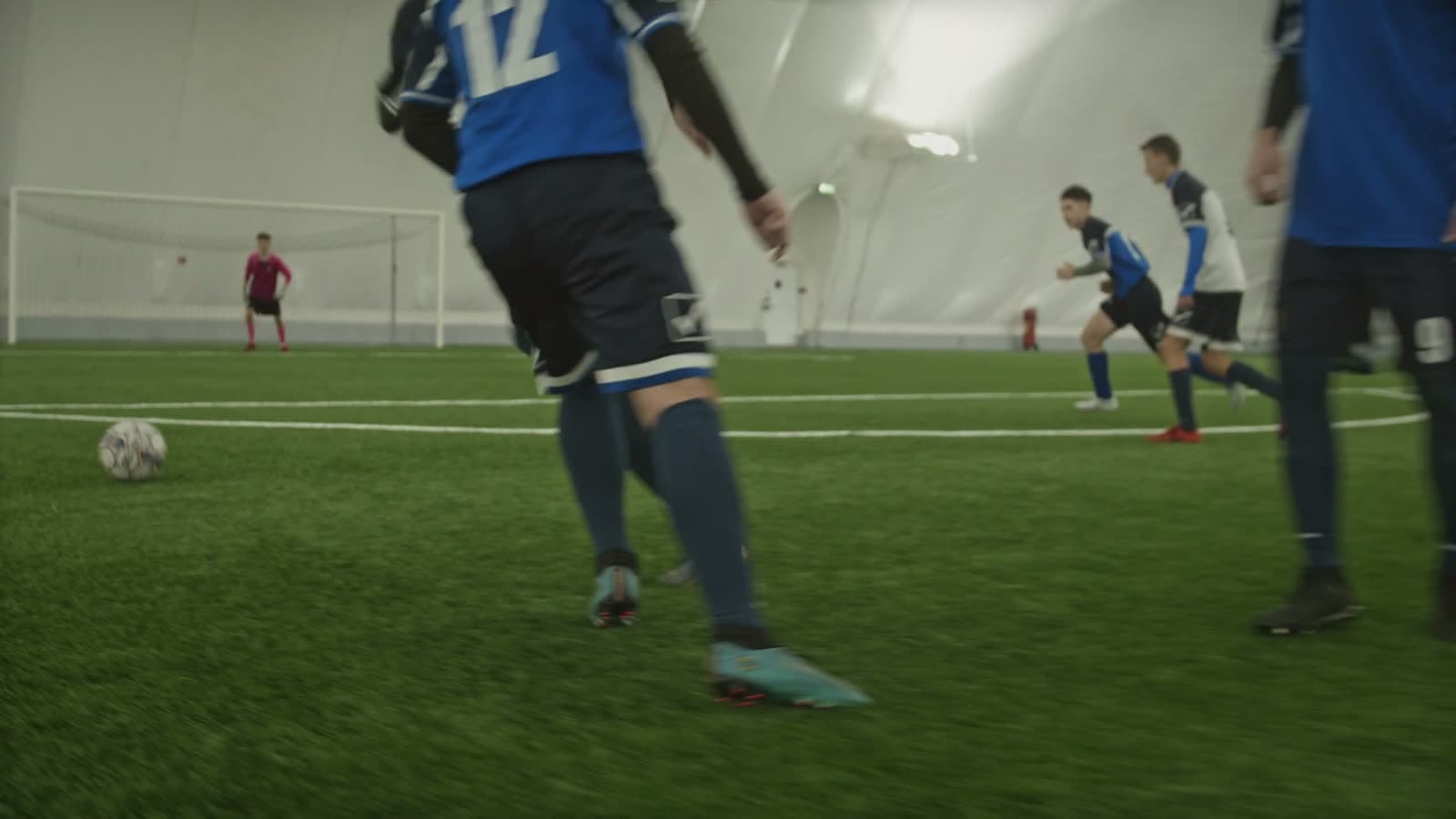
Put a real schedule against this and it stops being theoretical. Monday and Wednesday nights are league games, easy short highlight clips and a quick standings update. Thursday is youth training, one drill filmed from the sideline, captioned for the parents who are deciding whether a second term is worth it. Friday afternoon has an open slot that almost never gets marketed on its own, even though a single post aimed at local adults could fill it within a few weeks. Saturday is two birthday parties back to back, ten seconds of cake, ten seconds of a goal celebration, done. Sunday is a pickup run that needed nothing more than someone remembering to open the camera for thirty seconds.
That's six to eight pieces of content from a week the facility was running anyway, covering every audience that pays to use the building. No shoot day, no script, no extra hours beyond the two or three minutes it takes to hit record. The only real cost is remembering to do it consistently and having somewhere for it to go once it's filmed, which is exactly the part that tends to fall apart when it's left to whoever has a spare minute that day.
Why Most Owners Still Get It Wrong
If the advantage is this obvious, why do so many dome accounts still look like an afterthought? A few patterns show up again and again.
They treat social media as a notice board, not a growth channel. The posts that do go up are almost always operational: schedule changes, a reminder about registration, a rain check that doesn't even apply to an indoor facility. That's useful information, but it's not content that earns a new booking from someone who's never set foot in the building.
They run one account for four different audiences and speak to none of them well. A parent deciding on a youth program, an adult looking for a league team, and someone shopping for a birthday party venue are three completely different decisions. Posting the same generic flyer to all three means none of them feel like the content was made for them.
They post in bursts tied to registration deadlines, then go quiet. A flurry of activity right before a season starts, then silence until the next one. That's the opposite of what a facility with zero off-season should be doing. There's no reason for the content calendar to have a season when the building doesn't.
They assume word of mouth is enough because the facility is already busy. Busy on leagues that already exist is not the same as growing new leagues, filling off-peak hours, or building the birthday party pipeline that pads margins the rest of the week. Being full on a Tuesday night doesn't mean the Tuesday afternoon slot is booked too.
They let one person's spare time decide whether anything gets posted at all. When content depends entirely on whichever staff member happens to remember their phone that day, it disappears the moment that person is busy, on leave, or has simply moved on. A facility with this much going on every week deserves a system that doesn't depend on one person's memory.
None of these are hard problems to fix. They're habits, mostly inherited from treating social media as a chore squeezed in between running the actual facility. But they're exactly why a niche with this much built-in advantage still has so many accounts that look abandoned.
How to Start This Week, Without Adding Headcount
None of this requires hiring a videographer or buying new gear. It requires a short list of habits, applied consistently, starting with whatever is already on the schedule this week.
- Assign one person per session type, the league night regular, the Saturday coach, whoever's at the front desk during parties, and give them a thirty-second job: film one clip before they leave.
- Build a running list of the four audiences (league players, youth parents, party bookers, drop-in adults) and check that at least one post a week is speaking directly to each of them, not one generic post trying to reach all four.
- Name your quietest time slot out loud in your content, not just in your booking software, and give people an actual reason to fill it.
- Post through the calendar the same way in January as in September. There's no season to taper off for, so don't build one into the content plan by habit.
- Review what got the most saves, shares or comments each month and do more of that specific thing, not more content in general.
Owners who put even a rough version of this in place for a single month usually find the same thing: the content was never the hard part. The facility was already producing it every day. The only missing piece was a habit and a place for it to live.
The Easiest Niche to Market Well
Strip it down and the case is simple. No off-season to work around. No weather to hedge against. Four paying audiences already walking through the same door every week. Content that's already happening and just needs to be pointed at with a phone. Most facility types in this industry would trade for that setup without thinking twice.
The owners who actually use it end up with something close to a flywheel: league content pulls in more league players, party content pulls in more parties, youth content pulls in more sign-ups, and all of it reinforces the same message, that this is the dome people choose. The owners who don't use it are sitting on the easiest marketing setup in the entire industry and letting it run on autopilot instead.
Fixing it doesn't require reinventing the facility or the programs already running inside it. It requires treating the content that's already happening on the turf every week as seriously as the leagues, the training and the parties themselves, because right now, for most domes, it's the only part of the operation not being run on purpose.
The dome down the road with the same leagues, the same turf and the same coaches isn't winning on facility quality. It's winning because someone remembered to hit record.
Want us to look at your facility's social media?
Get a free, honest review of what's working and what's not, no call required.
Get Your Free Audit